- Jun 05 Wed 2013 22:45
-
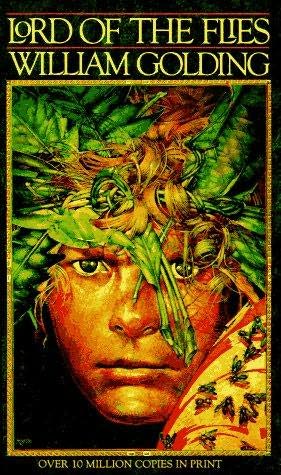
WEEK 16: Lord of the Flies
- May 29 Wed 2013 22:43
-
WEEK 15: The Ones Who Walk Away from Omelas

- May 22 Wed 2013 22:41
-
WEEK 14: Paul‘s Case
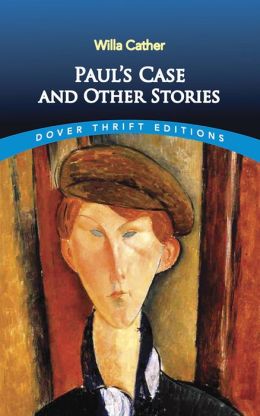
SUMMARY:
Paul has been suspended from his high school in Pittsburgh. As the story opens, he arrives at a meeting with the school’s faculty members and principal. He is dressed in clothes that are simultaneously shabby and debonair. The red carnation he wears in his buttonhole particularly offends the faculty members, who think the flower sums up Paul’s flippant attitude. Paul is tall and narrow-shouldered, with enlarged pupils that remind one of a drug addict’s eyes.
- May 15 Wed 2013 22:40
-
WEEK 13: Where Are You Going, Where Have You Been?

SUMMARY:
Connie
Connie rejects the role of daughter, sister, and “nice” girl to cultivate her sexual persona, which flourishes only when she is away from her home and family. She makes fun of her frumpy older sister, June, and is in constant conflict with her family. Her concerns are typically adolescent: she obsesses about her looks, listens to music, hangs out with her friends, flirts with boys, and explores her sexuality. She takes great pleasure in the fact that boys and even men find her attractive. Connie has cultivated a particular manner of dressing, walking, and laughing that make her sexually appealing, although these mannerisms are only temporary affectations. She behaves one way in her home and an entirely different way when she is elsewhere. Her personality is split, and when she is at home, her sexuality goes into hiding. However, Arnold Friend’s arrival at her house forces her two sides to merge violently. In a way, Connie is not fully sexual until Arnold’s intrusion into her home—until then, her sexuality was something outside of her “true” self, the self that she allowed her family to see.
- May 08 Wed 2013 22:36
-
WEEK 12: The Rocking-Horse Winner(2)

A literary analysis of 'The Rocking Horse Winner' by D H Lawrence cannot fail to mention the strong metaphor of the toy rocking horse itself. Other strong metaphors include the race horses and the idea of gambling in general.. The image of a boy rocking himself to illness and death on a toy horse suggests a powerful and upsetting metaphor for a child's burning ambition and distress, and to understand the metaphor we must look more closely at the story itself.
In "The Rocking-Horse Winner," short story by D H Lawrence, a child gets the feeling that circumstances in his family are deteriorating financially and feels utterly powerless to improve the situation. He sees the bitterness of his mother's discontent and tries to improve her lot, although she seems to pay him little regard. All her attention seems concentrated on a husband who, despite his efforts, can never provide enough for her insatiable appetite for material things. Horses in general, gambling on their races and in particular, the rocking horse itself become metaphors for the child's ambition, and the driven quality of his determination to succeed - at all costs.
- May 01 Wed 2013 22:30
-
WEEK 11: The Rocking-Horse Winner

- Apr 24 Wed 2013 22:27
-
WEEK 10: Midterm

- Apr 17 Wed 2013 22:33
-
WEEK 9: Araby(3)

QUOTES FOR THINKING:
I watched my master’s face pass from amiability to sternness; he hoped I was not beginning to idle. I could not call my wandering thoughts together. I had hardly any patience with the serious work of life which, now that it stood between me and my desire, seemed to me child’s play, ugly monotonous child’s play.
- Apr 10 Wed 2013 22:26
-
WEEK 8: Araby(2)
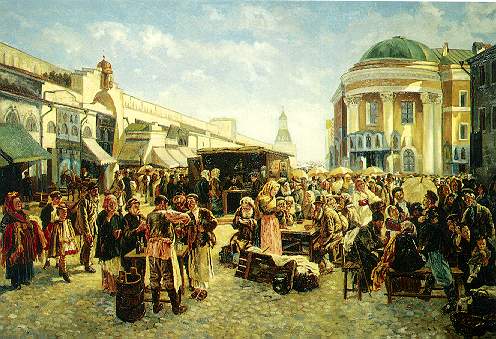
Profile
Writer. Born James Augustine Aloysius Joyce on February 2, 1882 in Dublin, Ireland. Joyce was one of the most revered writers of the 20th century, whose landmark book, Ulysses, is often hailed as one of the finest novels ever written. His exploration of language and new literary forms showed not only his genius as a writer but spawned a fresh approach for novelists, one that drew heavily on Joyce's love of the stream-of-consciousness technique and the examination of big events through small happenings in everyday lives.
- Apr 03 Wed 2013 22:24
-
WEEK 7: Araby

SUMMARY:
The narrator, an unnamed boy, describes the North Dublin street on which his house is located. He thinks about the priest who died in the house before his family moved in and the games that he and his friends played in the street. He recalls how they would run through the back lanes of the houses and hide in the shadows when they reached the street again, hoping to avoid people in the neighborhood, particularly the boy’s uncle or the sister of his friend Mangan. The sister often comes to the front of their house to call the brother, a moment that the narrator savors.
- Mar 27 Wed 2013 22:22
-
WEEK 6: The Tell-Tale Heart

Summary
An unnamed narrator opens the story by addressing the reader and claiming that he is nervous but not mad. He says that he is going to tell a story in which he will defend his sanity yet confess to having killed an old man. His motivation was neither passion nor desire for money, but rather a fear of the man’s pale blue eye. Again, he insists that he is not crazy because his cool and measured actions, though criminal, are not those of a madman. Every night, he went to the old man’s apartment and secretly observed the man sleeping. In the morning, he would behave as if everything were normal. After a week of this activity, the narrator decides, somewhat randomly, that the time is right actually to kill the old man.
- Mar 20 Wed 2013 22:20
-
WEEK 5:Finding Forrester(2)


